_for_a_Recruitment_Software.webp)
Ending the Telephone Game: Using AI to Align Recruiters and Hiring Managers
One of the greatest points of friction in any recruitment cycle doesn’t happen between the recruiter and the candidate—it happens between the recruiter and the hiring manager.
Misaligned expectations, vague intake notes, and lost context during multi-stage interviews drastically drag out the time-to-hire. Recruiters often find themselves acting as messengers, trying to capture exactly what a hiring manager wants, only to realize weeks later that the target has shifted.
AI-driven collaboration tools are fundamentally changing this dynamic, turning recruiters into highly consultative strategic partners.
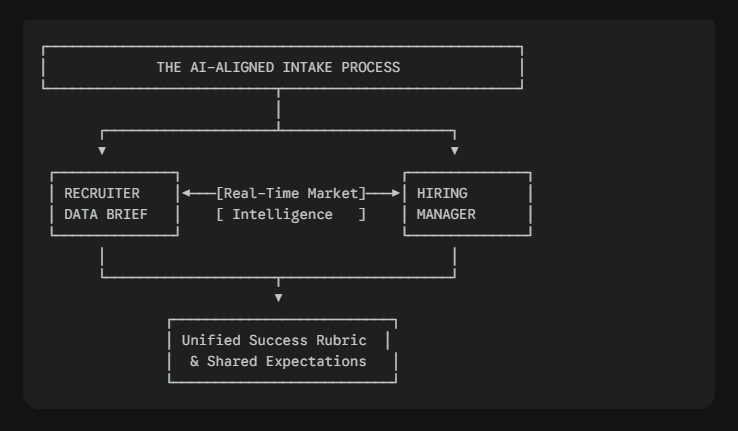
1. Data-Backed Intake Meetings
When launching a new job requisition, recruiters can now leverage AI to pull real-time market intelligence. Instead of guessing if a skill set is available locally, the AI provides an immediate snapshot of market demand, competitor salary benchmarks, and talent scarcity. This allows the recruiter to guide the hiring manager toward realistic, data-backed success criteria right from day one.
2. Eliminating Lost Interview Context
How often has a hiring manager asked you, "What did that candidate say about their remote team management experience again?"
With automated interview intelligence platforms, interview context is never lost. AI captures transcript summaries, flags key conversational highlights, and notes exactly where a candidate demonstrated a core competency. If a hiring manager misses an initial screening, they can easily search the transcript for specific keywords or themes, seamlessly aligning their evaluation with the recruiter's notes.
3. Shared Accountability
By establishing an objective, AI-assisted scoring rubric, both recruiters and hiring managers evaluate talent against the exact same standards. This removes subjective "gut-feeling" disagreements and creates a streamlined, highly transparent pipeline where everyone is on the same page.
.CCHX7fac.png)
We are experienced professionals who understand that It services is changing, and are true partners who care about your future business success.
Our Location
- 519, Fortune Square, BKC, Mumbai - 400051.